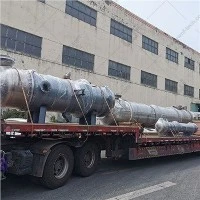
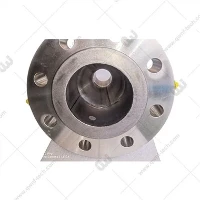
If you've ever worked in chemical processing, pharmaceuticals, or advanced materials manufacturing, you know how critical it is to choose equipment that can handle harsh, corrosive substances without failing. For years, I've helped businesses navigate this challenge as a supplier of tantalum lined reactors-and one of the most common questions I get is: "What materials can actually be processed in these reactors?"
It's a great question, because not all reactors are created equal. Carbon steel or stainless steel reactors might work for mild applications, but when you're dealing with aggressive acids, high temperatures, or corrosive mixtures, those materials can leach into your product, cause equipment damage, or even lead to safety hazards. That's where tantalum lining comes in. Tantalum is a rare metal with exceptional corrosion resistance-many people compare it to gold in terms of its inertness, but it's far more practical for industrial use.


Let me break down what makes tantalum such a game-changer, then dive into the specific materials that perform well in a tantalum lined reactor. I'll also touch on related tantalum lined products that work hand-in-hand with these reactors, because the system only works as a whole.
First, why tantalum? This metal forms a self-healing oxide layer (tantalum pentoxide, Ta₂O₅) when exposed to air or oxygen. That layer is incredibly stable-it doesn't react with most acids, has a high melting point (around 2,996°C), and can withstand extreme pressure. Unlike linings like PTFE or glass, tantalum doesn't degrade at high temperatures (PTFE starts to break down above 260°C, and glass can crack under thermal shock). For industries running processes at elevated temps, that's a huge benefit.
Now, let's talk about the materials you can process in a tantalum lined reactor. I've seen these reactors handle everything from routine acid synthesis to complex pharmaceutical intermediates, but here are the most common and high-stakes applications:
- Strong Inorganic Acids
This is bread and butter for tantalum lined equipment. Tantalum resists almost all inorganic acids-including hydrochloric, sulfuric, nitric, and phosphoric acids-at concentrations and temperatures that would destroy stainless steel or even nickel alloys. For example, 37% hydrochloric acid (a common lab and industrial chemical) at its boiling point (around 110°C) is no match for tantalum. I've supplied reactors to a chemical manufacturer that processes hydrochloric acid at 105°C; their old steel reactors needed replacement every 6 months, and our tantalum lined units have been running reliably for over 5 years.
It's worth noting that tantalum does react with hydrofluoric acid (HF) and strong bases like sodium hydroxide at high concentrations. But those are niche cases-most industrial processes using those materials have adjusted conditions that work fine.
- Organic Acids and Corrosive Organic Compounds
From acetic acid (vinegar, but industrial-grade) to citric acid, formic acid, and even more aggressive organic acids like trichloroacetic acid, tantalum lined reactors handle these with ease. Organic solvents are another big one-think methyl ethyl ketone (MEK), toluene, and xylene. These solvents are common in pharmaceutical drug synthesis, where purity is non-negotiable. Tantalum doesn't leach into these organics, so you don't have to worry about contaminating your final product.
I also want to mention that our tantalum lined reactors work well for processes that mix organic acids with water, which can increase corrosion for other materials. A specialty chemical company I partner with runs a continuous process of acetic acid and water at 120°C-they used to have issues with pitting in their steel reactors, but since switching to our units, they've seen zero corrosion-related downtime.
-
Corrosive Salt Solutions
Salt brines, metal salt solutions, and other ionic mixtures can be tricky because they can cause crevice corrosion or stress corrosion cracking in many metals. Tantalum's inertness makes it ideal here. For example, lithium chloride, sodium chloride, and copper sulfate solutions-even at high temperatures and concentrations-don't affect tantalum. A battery materials manufacturer uses our reactors to process lithium salts for their cathode materials. The salt solutions are at 150°C, and the reactors have held up perfectly. This is a growing market, as the demand for advanced batteries keeps rising, and purity in these processes is critical. -
High-Temperature Reactions (With Acidic or Corrosive Media)
One of the biggest advantages of tantalum lined reactors over other lined equipment is their ability to handle high temperatures. Glass-lined reactors, for example, can suffer from thermal shock if you heat or cool them too quickly. Tantalum, being a metal, has excellent thermal conductivity-about 14 times higher than glass-so it can handle rapid temperature changes without cracking. That makes it perfect for processes like hydrolysis, sulfonation, or nitration that run at 180–250°C.
I recently worked with a fine chemical producer that needed a reactor for nitration reactions at 220°C with nitric and sulfuric acid. Their previous glass-lined reactor failed after 8 months due to thermal stress and acid attack. We installed a Tantalum Lined Reactor for them, and it's been operating for over 3 years without any issues. The ability to run at higher temperatures also speeds up reaction times, which boosts their productivity.
Now, it's not just the reactor itself that matters. To get the most out of a tantalum lined system, you need complementary components that are also corrosion-resistant. That's why I always recommend pairing the reactor with other tantalum lined products. For example, if you're transferring corrosive fluids from the reactor to another part of your process, Tantalum Lined Pipe ensures there's no leakage or contamination. We've had clients tell us that using unlined pipes with their reactors led to corrosion in the piping, which disrupted their process-switching to lined pipes solved that problem entirely.
Another important component is temperature monitoring. If you can't accurately track the temperature inside your reactor, you could accidentally push it into a range where tantalum might react (though that's rare for most processes). A Tantalum Lined Thermowell protects the temperature sensor from the corrosive media while providing accurate readings. I've seen clients skip this and end up with sensors failing, leading to overheating and reactor damage-so it's a small investment that pays off big time.
Wait, can you process non-acidic materials in a tantalum lined reactor? The short answer is yes, but it's not necessary. Tantalum is more expensive than other linings, so it's best used where you actually need its corrosion resistance. For neutral materials like pure water, simple stainless steel reactors work fine. But if your process has any trace of corrosive components, even something as small as a few parts per million of acid, tantalum is worth the extra cost. I had a client a few years back who tried to save money by using a tantalum lined reactor for a neutral water process-they later switched when a new line with hydrochloric acid was added, and they had to replace the expensive tantalum anyway. So it's always better to size your equipment for your actual process, not what you think you might need later.
Another point to consider: the quality of the tantalum lining. Not all tantalum lined reactors are the same. Some manufacturers use cladding, where a thin layer of tantalum is bonded to a steel vessel, while others use explosive bonding or weld lining. Explosive bonding creates a stronger, more uniform bond that prevents delamination, which is a major risk for poorly made lined reactors. Delamination happens when the lining separates from the outer vessel, leading to corrosion of the steel underneath. All the tantalum lined reactors we supply use explosion bonding, so that risk is eliminated.
Let me also address a common misconception: tantalum is only for large industrial processes. No, we also supply smaller reactors for lab-scale and pilot plant applications. A pharmaceutical startup I worked with needed a small reactor for drug development, where they were processing complex intermediates in sulfuric acid at 180°C. They couldn't use a glass-lined reactor because it would crack, and stainless steel would contaminate their product. Our small Tantalum Lined Vessel was the perfect solution for them.
So to wrap up, the materials that work best in a tantalum lined reactor are:
- Strong inorganic acids (hydrochloric, sulfuric, nitric, phosphoric) at most concentrations and temperatures below their boiling points (avoid hydrofluoric acid and high-concentration strong bases).
- Organic acids (acetic, citric, formic, trichloroacetic) and corrosive organic solvents (MEK, toluene, xylene).
- Corrosive salt solutions and ionic mixtures.
- High-temperature processes (180–250°C) with acidic or corrosive media, where other linings fail due to thermal stress or corrosion.
If you're working with any of these materials, a tantalum lined reactor can save you money in the long run by reducing downtime, replacing equipment less often, and ensuring product purity. It's not a one-size-fits-all solution, but for high-corrosion, high-temperature applications, it's the most reliable option on the market.
I've been in this industry for over a decade, and I've seen clients go through countless reactors that failed due to corrosion. The key is to invest in equipment that's built for your specific process, not just the cheapest option. If you're looking for a reliable tantalum lined reactor, or need advice on whether it's right for your materials, don't hesitate to reach out. We can help you design a system that works for your process, including complementary components like Tantalum Lined Pipe, Tantalum Lined Thermowell, and Tantalum Lined Vessel if needed. Let's work together to keep your process running smoothly.