Hey there, it's Mia from the tantalum lined vessel team here, and today I'm answering one of the most common questions we get from industrial folks working with corrosive chemicals: "What's the capacity range of tantalum lined vessels?" If you've been around this space, you know tantalum is basically the gold standard (pun totally intended) for handling harsh acids, high temps, and pressures that would eat through stainless steel or even Hastelloy in no time. But when someone's first looking into getting one, sizing is everything-too small, and you can't meet production goals; too big, and you're wasting budget. Let's break this down straight, no fancy jargon that makes your eyes glaze over.
First, let's get one thing clear: Tantalum lined vessels aren't one-size-fits-all. Unlike generic steel tanks that come in standard 100-gallon or 1000-gallon sizes, tantalum lined ones are custom-built way more often, because every industrial process (whether it's pharma API manufacturing, chemical processing, or even specialty battery material production) has totally different needs. That flexibility actually plays a huge role in their capacity range, so stick with me here.
Let's start with the lower end of the scale. I've talked to so many small-batch manufacturers or lab teams that think tantalum lining is only for huge plants, but nope-we make vessels way smaller than you'd guess. Our smallest standard offerings? We've got 5-gallon lab-scale tantalum lined vessels. Wait, that's tiny, right? Perfect for R&D teams testing a new chemical reaction that's super corrosive-you don't want to risk ruining a $10k stainless steel reactor when a small tantalum lined one works for prototypes. Now, why can we make them this small? Tantalum is malleable enough that even thin linings (we usually use 1-2mm thick for small stuff) fit tightly over the interior metal shell (usually carbon steel or stainless steel for structural support) without any gaps. No gaps mean no corrosion seeping through, which is the whole point of the lining.
Moving up, the mid-range is where most of our commercial clients land. This is from about 100 gallons to 10,000 gallons. These are the go-to for mid-sized chemical plants or pharma facilities scaling up from lab tests to full production. A lot of our clients here are making things like specialty acids, agrochemical intermediates, or even fine chemicals that need consistent, corrosion-resistant environments. The key with mid-range vessels is balancing lining thickness with structural integrity. If you go too big, the shell has to handle more pressure, and the tantalum lining has to fit without cracking during fabrication. For reference, our 5000-gallon units work really well for a lot of our pharmaceutical partners because they handle batch sizes that are just right for regulatory compliance in API production.
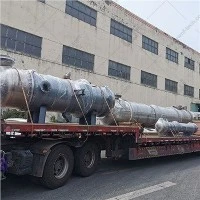
Now, the upper end-this is where it gets exciting for large-scale industrial operations, like petrochemical plants or battery material facilities. We've built tantalum lined vessels up to 30,000 gallons, and honestly, we could go bigger if someone needs it. Wait, why is that possible? The outer shell is the main structural piece here, and the tantalum lining is bonded to it with a high-strength adhesive (or explosion-bonded, for extra high-pressure applications) that keeps it from shifting even when the vessel is full of hot, corrosive liquid. I remember one client in the battery space a couple years back needed a 25,000-gallon vessel for processing lithium-ion battery cathodes-their old Hastelloy vessel was failing every 6 months, and our tantalum one is still running strong after 2 years. That's the kind of scale where tantalum lining actually saves them money long-term, even if upfront costs are higher.
Wait, but let's be real-there are limits to how big or small we can go, and those limits aren't arbitrary. The main factors that cap the range are: 1) Tantalum's malleability: Super small vessels (like under 5 gallons) get tricky because the lining has to conform to tiny shapes without wrinkling. 2) Lining integrity: For vessels over 30,000 gallons, the lining would be so large that bonding it evenly and preventing gaps (which would lead to corrosion) gets really tough. 3) Shipping and installation: A 30,000-gallon vessel is massive-you can't just ship it via standard freight; you need to move it with specialized equipment, so we have to factor in logistics when we quote projects. That's why even if we technically could make a 40,000-gallon vessel, most clients don't need it, and the hassle isn't worth it.
Also, it's important to note that capacity isn't just about volume-we've had clients ask for "capacity" but really mean internal dimensions, or pressure ratings that tie into how much fluid they can safely hold. Tantalum lined vessels can handle pressures up to 150 PSI and temperatures up to 250°C, which is why they're versatile across so many industries. If you need a unit that can handle higher temps, we adjust the lining thickness and bonding method, which might slightly shift the usable capacity, but we always design it to meet your process specs first.
Now, you might be thinking-this is about vessels, but what if I need other tantalum lined components for my process? Oh, great question, because a lot of our clients need more than just a vessel. We also make parts that work hand-in-hand with your vessel, like the Tantalum Lined Thermowell for accurate temperature measurements, or the Tantalum Lined Pipe to connect your vessel to other parts of your system. If you're already looking at vessels, those parts are easy to integrate, so we often bundle them into quotes to make it simpler for our clients.
Wait, let's circle back to the original question: So what's the official capacity range? To keep it simple, from our experience, it's roughly 5 gallons (lab scale) up to 30,000 gallons (large commercial scale). But again, that's not a hard line-we've built 35,000-gallon units for specific projects, and we can tweak smaller sizes to under 5 gallons for ultra-compact lab setups. The biggest takeaway here is that every vessel is tailored to your needs, so the "range" isn't a one-size-fits-all number. It's based on your production volume, process conditions, and budget.
I should also mention that when a client reaches out to us, the first thing we do is ask about their current process: How much material do you process per batch? What's the temperature and pressure? What kind of chemicals are you working with? That info lets us narrow down the right capacity and design, instead of just quoting a random size. For example, if a small specialty chemical company says they do 20-gallon batches and work with 98% sulfuric acid, we'll recommend a 25-gallon tantalum lined vessel (extra room for mixing) with a standard lining. No overkill, no under-delivering.
Another common mix-up: People sometimes confuse tantalum lined vessels with solid tantalum vessels. Solid tantalum is super expensive, so lining a cheaper metal shell is way more cost-effective, especially for large volumes. That's why our capacity range is so broad-we're using a structural shell for most of the strength, so we don't have to use tons of expensive pure tantalum. A 10,000-gallon solid tantalum vessel would cost millions, but a lined one is a fraction of that, and just as corrosion-resistant. If you're curious about the details on that, you can check out our Tantalum Lined Vessel page for specs, but the quick version is that lining hits the sweet spot of performance and cost.
And if you're scaling up and need something a bit different than a standard vessel, like a reactor? We make those too-our Tantalum Lined Reactor line has a similar capacity range, with extra features for mixing or reaction control, which is perfect for synthesis or polymerization processes. So even if you thought a reactor was a totally different category, it's built on the same flexible capacity framework.
At the end of the day, the capacity of your tantalum lined vessel isn't a number you have to guess at. Whether you're a lab needing a tiny 5-gallon unit or a plant needing a 25,000-gallon workhorse, we can design something that fits exactly what you need. The key is to work with a supplier that understands both the technical side of tantalum lining and the practical needs of industrial operations-no sales fluff, just straight talk about what works for your process.
If you're ready to talk through your project, whether you're just starting to research or you have specific capacity in mind, reach out to our team. We don't do pushy sales calls; we just want to help you find the right solution that saves you money on maintenance and downtime in the long run. No matter if you need a small lab unit or a large-scale production vessel, we've got you covered.