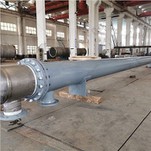
Testing methods for Tantalum Tubular Heat Exchangers
Visual Inspection Methods
Examiners use high resolution cameras to survey internal surfaces for physical damage. Light reflection helps identify cracks or corrosion on the metal components. Zirconium Column Internals require clear visibility to spot subtle surface changes. Similar techniques apply when assessing a Tantalum Tubular Heat Exchanger for external wear. Direct observation remains the primary step in identifying obvious structural flaws before advanced testing begins.
Ultrasonic Testing Procedures
Sound waves measure wall thickness and detect internal voids without dismantling equipment. Probes transmit signals that bounce back from material boundaries to reveal hidden defects. Zirconium Column Internals are scanned systematically to ensure uniform material integrity. This nondestructive method is also standard for verifying the tube walls of a Tantalum Tubular Heat Exchanger. Consistent data collection prevents unexpected failures during high pressure operational cycles.
Radiographic Examination Techniques
X-ray imaging penetrates dense metal to reveal internal discontinuities or weld issues. Film or digital sensors capture variations in density indicating potential weaknesses. Zirconium Column Internals benefit from this deep penetration view of complex geometries. Facilities often use the same radiographic protocols for a Tantalum Tubular Heat Exchanger to ensure safety. Detailed images allow engineers to make informed decisions about repair or replacement needs.
Eddy Current Analysis
Electromagnetic fields induce currents that highlight surface and near surface anomalies. Coils move along the material to detect changes in conductivity or permeability. Zirconium Column Internals are evaluated for thinning or pitting using this sensitive approach. The technology shares principles with testing the tubes of a Tantalum Tubular Heat Exchanger for erosion. Rapid scanning covers large areas efficiently to maintain overall plant reliability standards.