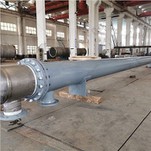
Knowledge about Tantalum Heat Exchanger
The tantalum heat exchanger is a specialized piece of thermal transfer equipment used in industrial environments where process conditions require materials capable of withstanding chemically aggressive media and high temperatures.
In industrial processing environments where aggressive chemicals and high-temperature fluids are present, specialized equipment is required to maintain reliable thermal transfer. One such piece of equipment is the tantalum heat exchanger, a device engineered to facilitate heat exchange between fluids in demanding chemical environments. Due to the unique physical and chemical characteristics of tantalum, these heat exchangers are commonly used in systems where corrosion resistance and thermal efficiency must be carefully managed.
A tantalum heat exchanger operates under the same thermodynamic principles as other heat exchangers but incorporates tantalum as the primary material for tubes, plates, or lining surfaces. The equipment is widely integrated into chemical processing systems where acid media, high temperatures, and complex reaction conditions require specialized construction materials.
This article provides a comprehensive explanation of the structure, working principles, materials, configurations, design parameters, installation considerations, maintenance requirements, and industrial specifications associated with a tantalum heat exchanger.
Understanding the Structure of a Tantalum Heat Exchanger
A tantalum heat exchanger typically consists of several key structural components that enable controlled heat transfer between two or more fluids. These components are carefully engineered to ensure durability and consistent thermal performance.
The primary structural elements include:
Heat Transfer Tubes
The heat transfer tubes form the core of the exchanger. In a tantalum heat exchanger, these tubes are fabricated from tantalum or tantalum-clad materials. Fluids pass either inside the tubes or around them, allowing heat to transfer through the tube walls.
Shell or Housing
The shell encloses the tube bundle and provides a containment space for one of the circulating fluids. Shell designs may vary depending on flow patterns, pressure ratings, and process requirements.
Tube Sheets
Tube sheets anchor the tantalum tubes securely and ensure proper separation between the two fluid streams. These plates are designed with precision drilling and sealing mechanisms to maintain leak-free operation.
Baffles
Baffles direct the fluid flow within the shell, improving heat transfer efficiency by increasing turbulence and ensuring uniform distribution across the tubes.
Connections and Nozzles
Inlet and outlet nozzles allow the process fluids to enter and exit the heat exchanger. These connections are designed according to specific piping standards to integrate with existing process systems.
Each structural component contributes to the stable operation of a tantalum heat exchanger within industrial environments.
Material Characteristics of Tantalum in Heat Exchangers
The defining characteristic of a tantalum heat exchanger lies in the material properties of tantalum itself. Tantalum is a refractory metal known for its high melting point, chemical inertness, and mechanical stability.
Key material properties relevant to heat exchanger design include:
High Melting Point
Tantalum has a melting point of approximately 3017°C, which enables it to remain structurally stable under high-temperature process conditions.
Corrosion Resistance
The metal forms a stable oxide layer on its surface that protects it from chemical reactions with strong acids and corrosive compounds.
Thermal Conductivity
Although not as conductive as copper, tantalum still provides sufficient thermal conductivity for efficient heat transfer across tube walls.
Mechanical Strength
Tantalum maintains structural integrity under mechanical stress, which is critical for pressurized heat exchange systems.
These properties allow the tantalum heat exchanger to function reliably in environments where other metals may degrade or react chemically with process fluids.
Working Principle of a Tantalum Heat Exchanger
The operational mechanism of a tantalum heat exchanger follows the fundamental principle of heat transfer between two fluids separated by a solid wall.
The process typically involves the following steps:
- A hot process fluid enters the heat exchanger through an inlet nozzle.
- The fluid flows through the tantalum tubes or shell side.
- A cooler fluid flows on the opposite side of the heat transfer surface.
- Thermal energy moves from the higher-temperature fluid to the lower-temperature fluid through conduction across the tantalum wall.
- The heated or cooled fluids exit through designated outlet ports.
- The efficiency of this process depends on factors such as fluid velocity, surface area of the tubes, temperature difference between fluids, and overall heat transfer coefficient.
A properly designed tantalum heat exchanger ensures stable temperature control while maintaining separation between chemically reactive process streams.
Common Configurations of Tantalum Heat Exchangers
Industrial systems utilize different configurations of tantalum heat exchanger equipment depending on process requirements and installation conditions.
Shell and Tube Tantalum Heat Exchanger
This configuration consists of a cylindrical shell containing a bundle of tantalum tubes. One fluid flows through the tubes, while the second fluid circulates around the tubes within the shell.
Shell and tube designs allow large heat transfer surfaces and are commonly used in continuous industrial processes.
Plate-Type Tantalum Heat Exchanger
Plate heat exchangers consist of multiple thin plates arranged in parallel. These plates create alternating channels for hot and cold fluids.
In some specialized systems, tantalum plates or tantalum-coated plates are used to resist corrosive chemicals.
Coil-Type Tantalum Heat Exchanger
Coil heat exchangers feature tantalum tubing wound into spiral or helical shapes. This design is often installed inside tanks or reactors to control temperature during chemical reactions.
Lined Tantalum Heat Exchanger
In certain applications, tantalum is applied as a lining over a structural metal such as steel. This configuration combines structural strength with chemical resistance.
Each configuration allows the tantalum heat exchanger to accommodate specific flow patterns, installation spaces, and process temperatures.
Design Parameters in Tantalum Heat Exchanger Engineering
Engineering a tantalum heat exchanger requires careful analysis of multiple technical parameters that influence heat transfer performance.
Heat Transfer Surface Area
The total surface area available for heat exchange directly affects the rate of thermal transfer between fluids.
Fluid Flow Rate
Higher fluid velocity generally improves heat transfer by increasing turbulence but must remain within pressure limitations.
Temperature Differential
The difference between hot and cold fluid temperatures drives the heat exchange process. Engineers calculate the log mean temperature difference (LMTD) to determine exchanger performance.
Pressure Ratings
The heat exchanger must withstand internal pressures from both process streams without structural deformation.
Fouling Factors
Deposits or contaminants may accumulate on heat transfer surfaces, reducing efficiency. Design calculations account for this potential resistance.
By balancing these parameters, engineers ensure that the tantalum heat exchanger performs consistently under industrial operating conditions.
Manufacturing Processes for Tantalum Heat Exchangers
Producing a tantalum heat exchanger requires specialized fabrication techniques due to the unique properties of tantalum.
Tube Fabrication
Tantalum tubes are manufactured through extrusion and precision machining processes to achieve the required thickness and diameter.
Welding Techniques
Welding tantalum requires controlled environments to prevent contamination. Inert gas shielding is typically used to protect the material during welding.
Cladding Processes
In tantalum-clad heat exchangers, a thin layer of tantalum is bonded to a base metal to provide corrosion resistance while maintaining structural strength.
Surface Finishing
Final finishing processes ensure smooth internal surfaces, which improve heat transfer efficiency and reduce fouling.
These manufacturing methods contribute to the structural precision and durability of a tantalum heat exchanger.
Installation Considerations for Tantalum Heat Exchangers
Proper installation is essential to ensure safe and efficient operation of a tantalum heat exchanger within industrial systems.
Important considerations include:
Foundation and Support
The exchanger must be mounted on a stable structure capable of supporting its weight and associated piping loads.
Alignment with Piping Systems
Accurate alignment prevents stress on the inlet and outlet nozzles.
Thermal Expansion Management
Temperature fluctuations cause materials to expand and contract. Expansion joints or flexible connectors may be required.
Access for Maintenance
Sufficient clearance must be provided to allow inspection and cleaning of internal components.
Careful installation procedures help maintain the integrity and performance of the tantalum heat exchanger.
Maintenance and Inspection Procedures
Routine maintenance ensures the continued functionality of a tantalum heat exchanger.
Maintenance activities typically include:
Visual Inspection
Regular visual inspections check for leaks, corrosion, or structural damage.
Cleaning of Heat Transfer Surfaces
Cleaning may involve mechanical brushing, chemical cleaning solutions, or high-pressure water flushing.
Leak Testing
Pressure testing verifies the integrity of tube joints and seals.
Monitoring Performance
Operators monitor temperature and pressure readings to ensure the heat exchanger operates within design parameters.
Scheduled maintenance helps maintain stable heat transfer performance and prolongs the service life of the tantalum heat exchanger.
Industrial Standards and Specifications
Manufacturing and installation of a tantalum heat exchanger must comply with recognized engineering standards and safety codes.
Common standards include:
- ASME Boiler and Pressure Vessel Code
- TEMA (Tubular Exchanger Manufacturers Association) standards
- ASTM material specifications
- ISO industrial equipment guidelines
These standards define requirements for material properties, design calculations, fabrication methods, testing procedures, and operational safety.
Compliance with these specifications ensures that the tantalum heat exchanger meets regulatory and engineering requirements in industrial environments.
Operational Monitoring in Process Systems
During operation, the performance of a tantalum heat exchanger is typically monitored through several process indicators.
Key monitoring parameters include:
- Inlet and outlet temperatures of both fluids
- Pressure drop across the exchanger
- Flow rate of process streams
- Heat transfer efficiency calculations
Control systems often integrate sensors and automated monitoring equipment to track these parameters continuously. Maintaining stable readings ensures that the tantalum heat exchanger continues to function according to design specifications.
Conclusion
The tantalum heat exchanger is a specialized piece of thermal transfer equipment used in industrial environments where process conditions require materials capable of withstanding chemically aggressive media and high temperatures. Its design incorporates tantalum components that facilitate reliable heat exchange while maintaining separation between process fluids.
Through careful engineering of structural components, material selection, manufacturing processes, and operational parameters, a tantalum heat exchanger provides stable and controlled heat transfer within complex chemical systems. Proper installation, routine maintenance, and adherence to engineering standards ensure consistent operation and long-term reliability in industrial heat transfer applications.