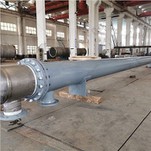
Tantalum is widely regarded as a premium material in highly corrosive environments, particularly in the chemical processing and pharmaceutical industries. However, even this "corrosion-resistant king" requires specific surface modifications to maximize its lifespan and performance. If you are sourcing or specifying Tantalum Column Internals, understanding the available surface treatments is critical for ensuring operational efficiency and long-term reliability.
In this blog, we will explore the most effective surface treatments for Tantalum Column Internals, helping you make informed decisions for your next engineering project.
Why Surface Treatment Matters for Tantalum
While pure tantalum naturally forms a protective oxide layer that provides exceptional resistance to acids, it can still be vulnerable to specific conditions, such as high-temperature caustic solutions or hydrofluoric acid. Furthermore, in distillation or absorption columns, surface characteristics directly impact mass transfer efficiency, fouling tendencies, and fluid dynamics. Applying the right surface treatment to Tantalum Column Internals can enhance these properties significantly.
Top Surface Treatments for Tantalum Column Internals
1. Precision Mechanical Polishing (Mirror Finishing)
One of the most common and effective treatments for Tantalum Column Internals is mechanical polishing. Achieving a mirror-like finish (often reaching surface roughness of Ra < 1nm) offers multiple benefits:
- Anti-Fouling: A smooth surface prevents solids, polymers, or viscous liquids from adhering to the internals, which is crucial for maintaining high separation efficiency.
- Enhanced Corrosion Resistance: Polishing removes surface defects, micro-cracks, and embedded contaminants from machining, promoting the formation of a more uniform and stable passive oxide layer.
- Improved Fluid Dynamics: Reduced surface friction leads to better vapor-liquid contact and lower pressure drops across the column.
2. Plasma Liquid Deposition (PLNP) & Anodizing
Advanced electrochemical treatments, such as Plasma Liquid Nanoprocessing (PLNP) or traditional anodizing, are used to grow functional oxide films directly on the tantalum surface.
- Thickened Oxide Layer: These treatments create a dense, firmly bonded tantalum pentoxide (Ta₂O₅) layer that significantly boosts dielectric strength and chemical inertness.
- Functional Customization: Depending on the process parameters, these coatings can be engineered to provide specific traits like enhanced thermal insulation, electrical insulation, or even tailored surface roughness for specific catalytic or wetting applications.
3. Tantalum Carbide (TaC) Coatings
For Tantalum Column Internals operating in extreme environments involving high temperatures, severe abrasion, or highly aggressive chemicals, applying a Tantalum Carbide coating is a game-changer.
- Extreme Hardness & Wear Resistance: TaC coatings protect the underlying tantalum from mechanical erosion caused by high-velocity fluids or particulate matter.
- Thermal Stability: With a melting point exceeding 3800°C, TaC maintains its structural integrity and chemical resistance even in extreme thermal shock conditions.
- Chemical Shielding: It acts as an ultimate barrier against corrosive media that might otherwise degrade standard tantalum surfaces over decades of service.
How To Choose The Right Treatment
Selecting the optimal surface treatment for your Tantalum Column Internals depends on your specific process parameters:
- For High-Purity Distillation: Opt for ultra-precision mechanical polishing to prevent product contamination and fouling.
- For Highly Corrosive/Abrasive Slurries: Consider Tantalum Carbide coatings or thickened plasma oxide layers for maximum durability.
- For Specialized Wetting Requirements: Tailored anodizing or plasma treatments can adjust the hydrophilicity/hydrophobicity of the internals to optimize liquid distribution.
Conclusion
Investing in the right surface treatment for your Tantalum Column Internals is not just about extending equipment life; it is about optimizing the entire separation process. Whether you require mirror polishing for anti-fouling, advanced plasma treatments for chemical shielding, or TaC coatings for extreme wear resistance, customizing the surface of your tantalum components ensures you get the maximum return on your capital investment.