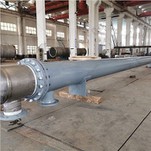
Corrosion resistance is a critical performance indicator for tantalum lined clamp holders, as tantalum's primary advantage lies in its resistance to harsh chemical environments. To conduct this test, immerse the clamp holders in the target corrosive media that they will encounter in actual service, such as strong acids, alkalis, or salt solutions. Maintain the test environment at the same temperature and pressure conditions as the operational setting. Monitor the surface condition of the tantalum lining regularly over an extended period, checking for signs of pitting, discoloration, peeling, or any other forms of degradation. Additionally, analyze the test media for any dissolved tantalum ions using spectroscopic techniques to quantify the corrosion rate accurately. A qualified clamp holder should show minimal to no corrosion after the test duration.
Mechanical strength testing ensures that the clamp holders can withstand the mechanical stresses during installation, clamping, and long-term operation. Start by assessing the clamping force capacity, verifying if the holder can exert and maintain the required clamping force without deformation. Conduct tensile and compressive strength tests on key components, focusing on the junction between the tantalum lining and the base material, as this is a potential weak point. Evaluate the fatigue resistance by subjecting the clamp holders to repeated clamping and releasing cycles that simulate real-world usage. Inspect for any cracks, deformation, or loosening of components after the test. The clamp holder must retain its structural integrity and mechanical performance to meet operational requirements.
Tantalum lined clamp holders may be used in high or low temperature environments, so temperature stability testing is essential. Place the clamp holders in a temperature-controlled chamber and expose them to the full range of temperatures they will experience in service, including extreme high and low values. Maintain each temperature level for a sufficient duration to allow thermal equilibrium. After thermal cycling, check for any changes in dimensions, warping of the structure, or damage to the tantalum lining, such as cracking or delamination. Test the clamping performance at different temperature points to ensure that the holding force does not decrease significantly under thermal stress. A stable clamp holder should maintain its functionality and structural integrity across the entire operating temperature range.
Sealing performance is vital for clamp holders used in fluid or gas handling applications to prevent leaks. Assemble the clamp holders with the corresponding pipes or components as in actual use. Apply the working pressure of the medium to the sealed system, using a test medium such as water, air, or an inert gas. Monitor the sealed area for any signs of leakage using methods such as pressure decay testing, bubble testing, or dye penetration testing. Maintain the pressure for a specified period to ensure long-term sealing reliability. Check if the tantalum lining affects the sealing effect, such as uneven contact causing gaps. The clamp holder must achieve a tight seal without any leakage under the designed working pressure.
Durability testing aims to predict the long-term service life of the tantalum lined clamp holders. Simulate the actual operating conditions comprehensively, including combining corrosion, mechanical stress, temperature cycles, and continuous clamping loads. Run the test for an extended period, equivalent to the expected service life or a accelerated test cycle based on industry standards. Regularly inspect the clamp holders during the test for any signs of performance degradation, such as reduced clamping force, increased corrosion, or structural damage. Analyze the wear and tear of moving parts and the integrity of the tantalum lining. The test results should demonstrate that the clamp holder can maintain stable performance over its intended service life without premature failure.