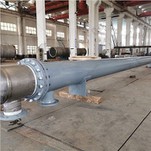
In the high-stakes worlds of chemical processing and pharmaceutical manufacturing, the production and handling of strong acids like sulfuric acid (H₂SO₄) and hydrochloric acid (HCl) are daily realities. However, these highly corrosive media present a relentless challenge: finding a cooling solution that doesn't fail prematurely. For many plant managers, the frequent leakage and contamination caused by standard equipment are all too familiar. This is where a high-performance Heat Exchanger for Sulfuric Acid-specifically one crafted from tantalum-becomes an absolute game-changer.
The High Cost of Corrosion in Acid Production
The core pain point in cooling sulfuric and hydrochloric acid lies in their aggressive chemical nature, especially at elevated temperatures and varying concentrations. Traditional materials often crumble under this pressure. Stainless steel corrodes rapidly, graphite is brittle and prone to breaking, and even high-performance alloys like Hastelloy can suffer from pitting and stress corrosion cracking over time.
When a heat exchanger fails in these critical processes, the consequences are severe:
- Dangerous Acid Leaks: Posing serious safety risks to personnel and the environment.
- Product Contamination: Leaking cooling water into the acid (or vice versa) ruins entire batches of high-value pharmaceuticals or chemicals.
- Unplanned Downtime: Frequent repairs and replacements halt production lines, leading to massive financial losses.
The Tantalum Solution: Unmatched Resistance Data
So, why is a tantalum-based Heat Exchanger for Sulfuric Acid considered the ultimate solution? The answer lies in the metal's unique chemistry. Tantalum forms an incredibly stable and self-healing oxide film (Ta₂O₅) on its surface. This protective shield makes it virtually immune to attack by most acids, regardless of temperature or concentration.
According to corrosion resistance data and isocorrosion charts, tantalum maintains exceptional stability in:
- Hydrochloric Acid (HCl): Resistant at all concentrations up to the boiling point.
- Sulfuric Acid (H₂SO₄): Highly resistant across a vast range of concentrations and temperatures where other metals fail rapidly.
By integrating tantalum into your cooling systems, you are essentially installing a barrier that refuses to react, ensuring the purity of your product and the safety of your plant.
Real-World Impact: A Case Study
Consider the experience of a large-scale chemical plant struggling with their hydrochloric acid recovery unit. They were previously using graphite heat exchangers, which required patching or full replacement every 8 to 10 months due to brittleness and leakage. This resulted in roughly 30 days of lost production annually.
After switching to a custom-designed Heat Exchanger for Sulfuric Acid and HCl made from high-grade tantalum, the results were transformative. Over the past three years, the equipment has operated continuously without a single leak or sign of corrosion. Consequently, unplanned maintenance downtime related to the cooling system was reduced by over 90%, saving the plant millions in operational costs and lost product.|
Customized Designs for Maximum Efficiency
Beyond just the material, solving acid cooling challenges requires smart engineering. Highly viscous acids or those prone to scaling need specialized designs to maintain optimal heat transfer rates.
We offer tailored solutions to meet these specific demands, such as:
- Tantalum Shell and Tube Heat Exchangers: The industry standard for high-pressure and high-temperature acid cooling.
- Corrugated Tube Designs: These induce turbulence in the fluid flow, which significantly improves heat transfer efficiency and helps prevent fouling or scaling on the tube walls.
- Immersion Heaters/Coolers: Perfect for heating or cooling aggressive media in open tanks or reactors.
Ready to Eliminate Acid Corrosion from Your Production Line?
Don't let inferior materials dictate your production schedule or compromise your safety standards. If you are dealing with sulfuric acid, hydrochloric acid, or other aggressive media, it's time to upgrade to a solution built to last.