

Hey there! As a supplier of Zirconium Components, I've been getting a lot of questions lately about polymer coatings for these components. So, I thought I'd take some time to share what I know.
Why Polymer Coatings for Zirconium Components?
Zirconium is an amazing metal. It's highly corrosion - resistant, has good mechanical properties, and is used in a wide range of industries like chemical processing, nuclear power, and aerospace. But in some extreme environments, even zirconium can benefit from an extra layer of protection. That's where polymer coatings come in.
Polymer coatings can enhance the performance of zirconium components in several ways. Firstly, they can provide additional corrosion protection. Some chemicals and environments are so harsh that they can gradually degrade the surface of zirconium over time. A polymer coating acts as a barrier, preventing direct contact between the zirconium and the corrosive agents.
Secondly, polymer coatings can improve the wear resistance of zirconium components. In applications where there's a lot of friction or abrasion, such as in machinery parts, a polymer coating can reduce the rate of wear, extending the lifespan of the component.
Types of Polymer Coatings for Zirconium Components
Epoxy Coatings
Epoxy coatings are one of the most commonly used polymer coatings for zirconium components. They have excellent adhesion to zirconium surfaces. Epoxies are known for their high chemical resistance, which makes them suitable for use in chemical processing plants. For example, in a plant that deals with strong acids or alkalis, zirconium components coated with epoxy can withstand the corrosive effects of these chemicals.
Epoxy coatings also offer good mechanical properties. They can resist impact and abrasion to a certain extent. This makes them a great choice for components that are likely to experience some physical stress during operation.
Polyurethane Coatings
Polyurethane coatings are another popular option. They are known for their flexibility and durability. Polyurethane coatings can withstand a wide range of temperatures, from very cold to relatively high temperatures. This makes them suitable for zirconium components used in different climate conditions or in processes with varying temperature requirements.
In addition, polyurethane coatings have good weather resistance. So, if zirconium components are used outdoors, such as in some construction or outdoor industrial applications, a polyurethane coating can protect them from the elements like rain, UV rays, and wind.
Fluoropolymer Coatings
Fluoropolymer coatings, like PTFE (Polytetrafluoroethylene), are well - known for their non - stick properties. When applied to zirconium components, they can prevent materials from sticking to the surface. This is extremely useful in applications where easy cleaning and low friction are required. For example, in food processing equipment, zirconium components coated with fluoropolymer coatings can be easily cleaned, reducing the risk of contamination.
Fluoropolymer coatings also have excellent chemical resistance, similar to epoxy coatings. They can resist a wide range of chemicals, including many solvents and corrosive substances.
Application of Polymer Coatings on Zirconium Components
Applying polymer coatings to zirconium components requires careful preparation and proper techniques. First of all, the zirconium surface needs to be thoroughly cleaned. Any dirt, grease, or oxide layer on the surface can affect the adhesion of the coating. Usually, a combination of mechanical cleaning methods, like sandblasting, and chemical cleaning methods, such as using solvents, is used to prepare the surface.
After the surface is clean, the polymer coating is applied. There are several methods for applying polymer coatings, including spraying, dipping, and brushing. Spraying is the most common method as it can provide a uniform coating thickness. However, for some small or complex - shaped zirconium components, dipping or brushing might be more appropriate.
Once the coating is applied, it needs to be cured. Curing is the process of allowing the coating to harden and form a strong bond with the zirconium surface. The curing process can be done at room temperature or with the help of heat, depending on the type of polymer coating used.
Examples of Zirconium Components with Polymer Coatings
Let's take a look at some specific zirconium components that often use polymer coatings.
Zirconium Demister
A zirconium demister is used to separate liquid droplets from gas streams in industrial processes. In a chemical plant, the gas streams can contain corrosive chemicals. By applying a polymer coating, such as an epoxy coating, to the zirconium demister, it can better withstand the corrosive environment, ensuring efficient operation and a longer service life.

Zirconium Column Internals
Zirconium column internals are used in distillation columns and other separation equipment. These components are exposed to various chemicals and high - pressure conditions. A polymer coating, like a fluoropolymer coating, can protect the zirconium column internals from corrosion and prevent substances from sticking to the surface, which is crucial for the proper functioning of the separation process.
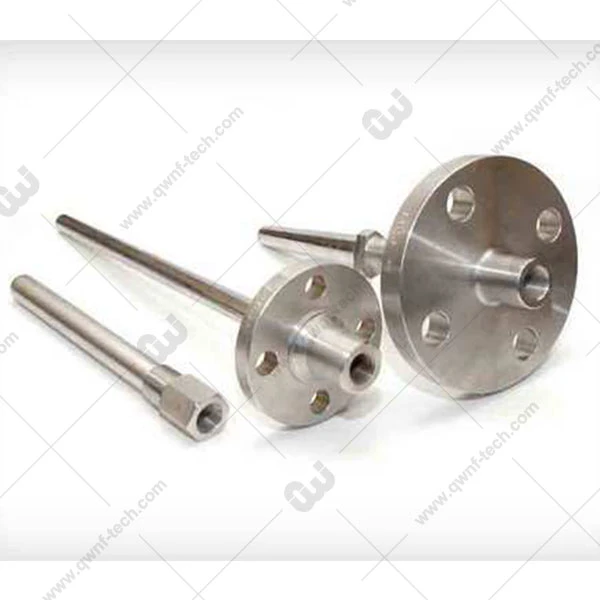
Zirconium Thermowell
A zirconium thermowell is used to protect temperature sensors in industrial processes. In some high - temperature and corrosive environments, a polymer coating can provide an extra layer of protection. For example, a polyurethane coating can help the zirconium thermowell resist the high temperatures and potential chemical attacks, ensuring accurate temperature measurements over a long period.
Choosing the Right Polymer Coating
When choosing a polymer coating for zirconium components, several factors need to be considered.
The first factor is the environment in which the component will be used. If it's a highly corrosive environment, a coating with high chemical resistance, like an epoxy or fluoropolymer coating, should be chosen. If the component will be exposed to a wide range of temperatures or outdoor conditions, a polyurethane coating might be a better option.
The second factor is the mechanical requirements of the component. If the component will experience a lot of friction or impact, a coating with good wear and impact resistance should be selected.
Conclusion
Polymer coatings are a great way to enhance the performance and lifespan of zirconium components. Whether it's an epoxy, polyurethane, or fluoropolymer coating, each type has its own unique properties that can be beneficial in different applications. As a supplier of zirconium components, I'm always here to help you choose the right polymer coating for your specific needs.
If you're interested in purchasing zirconium components with polymer coatings or have any questions about our products, feel free to reach out to start a procurement discussion. We can work together to find the best solutions for your projects.
References
- "Polymer Coatings: Principles, Performance, and Applications" by Z. W. Wicks, F. N. Jones, and S. P. Pappas.
- "Corrosion Protection of Metals with Organic Coatings" edited by J. W. Sinko.


