

As a supplier of tantalum demisters, evaluating the performance of these crucial components is of utmost importance. Tantalum demisters play a vital role in various industrial processes, especially in applications where efficient mist elimination is required to ensure the smooth and safe operation of equipment. In this blog post, I will share some insights on how to evaluate the performance of a tantalum demister.
1. Separation Efficiency
Separation efficiency is perhaps the most critical parameter when evaluating the performance of a tantalum demister. It refers to the ability of the demister to remove mist droplets from the gas stream. High separation efficiency means that a large percentage of the mist droplets are captured by the demister, preventing them from being carried downstream with the gas.
To measure separation efficiency, one common method is to use a particle counter. Before the gas enters the demister, the particle counter measures the concentration of mist droplets in the gas. After the gas passes through the demister, the particle counter measures the remaining concentration of mist droplets. The separation efficiency can then be calculated using the following formula:
[
\text{Separation Efficiency} = \frac{C_{in}-C_{out}}{C_{in}}\times100%
]
where (C_{in}) is the initial concentration of mist droplets and (C_{out}) is the concentration of mist droplets after passing through the demister.
A high - quality tantalum demister should have a separation efficiency of over 99% for a wide range of droplet sizes. However, the actual separation efficiency can be affected by several factors, such as the droplet size distribution, gas velocity, and the design of the demister.
2. Pressure Drop
Pressure drop is another important factor to consider when evaluating the performance of a tantalum demister. It is the difference in pressure between the inlet and the outlet of the demister. A high pressure drop indicates that the demister is causing significant resistance to the gas flow, which can lead to increased energy consumption and reduced process efficiency.
The pressure drop across a demister is influenced by several factors, including the gas velocity, the type and design of the demister, and the amount of captured mist. Generally, as the gas velocity increases, the pressure drop also increases. Additionally, demisters with a more complex structure or higher packing density tend to have a higher pressure drop.
To measure the pressure drop, pressure sensors can be installed at the inlet and outlet of the demister. The pressure difference can then be recorded and monitored over time. A well - designed tantalum demister should have a reasonable pressure drop that does not cause excessive energy consumption while still maintaining high separation efficiency.
3. Chemical Resistance
Tantalum is known for its excellent chemical resistance, which makes tantalum demisters suitable for use in highly corrosive environments. When evaluating the performance of a tantalum demister, it is crucial to ensure that it can withstand the chemical conditions of the specific application.
The chemical resistance of a tantalum demister can be evaluated through laboratory tests. Samples of the demister can be exposed to the chemicals present in the process environment for a certain period of time. After the exposure, the samples can be examined for signs of corrosion, such as weight loss, surface damage, or changes in mechanical properties.
In addition to laboratory tests, real - world performance data can also provide valuable information about the chemical resistance of the demister. If the demister has been used in similar applications without any significant corrosion issues, it is a good indication of its chemical resistance.

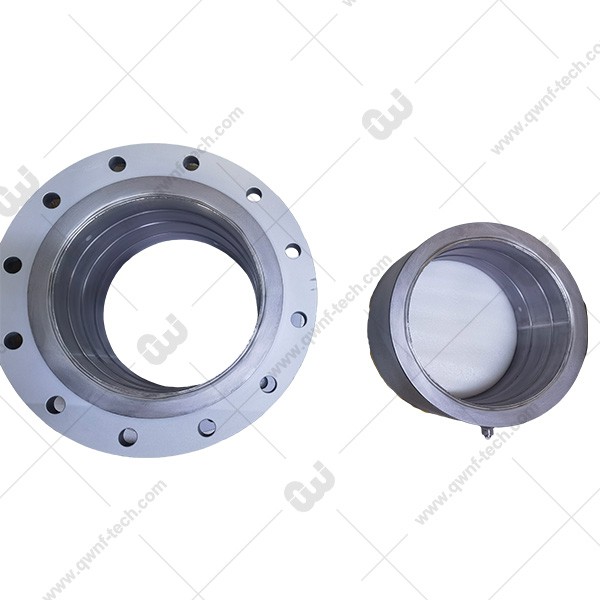
4. Mechanical Strength
The mechanical strength of a tantalum demister is important to ensure its long - term reliability and performance. It needs to withstand the forces exerted by the gas flow, as well as any mechanical vibrations or impacts during installation and operation.
To evaluate the mechanical strength, the demister can be subjected to various mechanical tests. For example, a tensile test can be used to measure the maximum tensile force that the demister can withstand before breaking. A compression test can be performed to assess its resistance to compressive forces.
In addition to these tests, the design and construction of the demister also play a crucial role in determining its mechanical strength. A well - designed demister with a proper supporting structure and high - quality materials will generally have better mechanical strength.
5. Flow Capacity
The flow capacity of a tantalum demister refers to the maximum volume of gas that it can handle without a significant decrease in separation efficiency or an excessive increase in pressure drop. It is an important parameter, especially in large - scale industrial processes where a high volume of gas needs to be processed.
The flow capacity of a demister is determined by its design, such as the size, shape, and porosity of the demister elements. A larger demister with a higher porosity will generally have a higher flow capacity. However, increasing the flow capacity may also affect the separation efficiency and pressure drop, so a balance needs to be struck.
To evaluate the flow capacity, the demister can be tested under different gas flow rates. The separation efficiency and pressure drop can be measured at each flow rate to determine the maximum flow capacity that meets the performance requirements.
6. Comparison with Other Tantalum Components
When evaluating the performance of a tantalum demister, it can be beneficial to compare it with other tantalum components used in the same process. For example, if you are also using Tantalum Reducer, Tantalum Lined Pipe Section, or Tantalum Column Internals, you can assess how well the demister works in conjunction with these components.
The compatibility between the demister and other components is important for the overall efficiency and reliability of the process. For instance, if the demister has a different chemical resistance or mechanical strength compared to the other components, it may lead to problems such as corrosion or mechanical failure at the interface.
In conclusion, evaluating the performance of a tantalum demister requires a comprehensive assessment of multiple factors, including separation efficiency, pressure drop, chemical resistance, mechanical strength, flow capacity, and compatibility with other components. By carefully evaluating these factors, you can ensure that you choose a high - quality tantalum demister that meets the specific requirements of your industrial process.
If you are in need of a reliable tantalum demister or have any questions about their performance evaluation, please feel free to contact us. We are more than happy to discuss your needs and provide you with the best solutions.
References
- Perry, R. H., & Green, D. W. (2008). Perry's Chemical Engineers' Handbook. McGraw - Hill Professional.
- Cheremisinoff, N. P. (1986). Industrial separation processes handbook. Technomic Publishing Co.


